
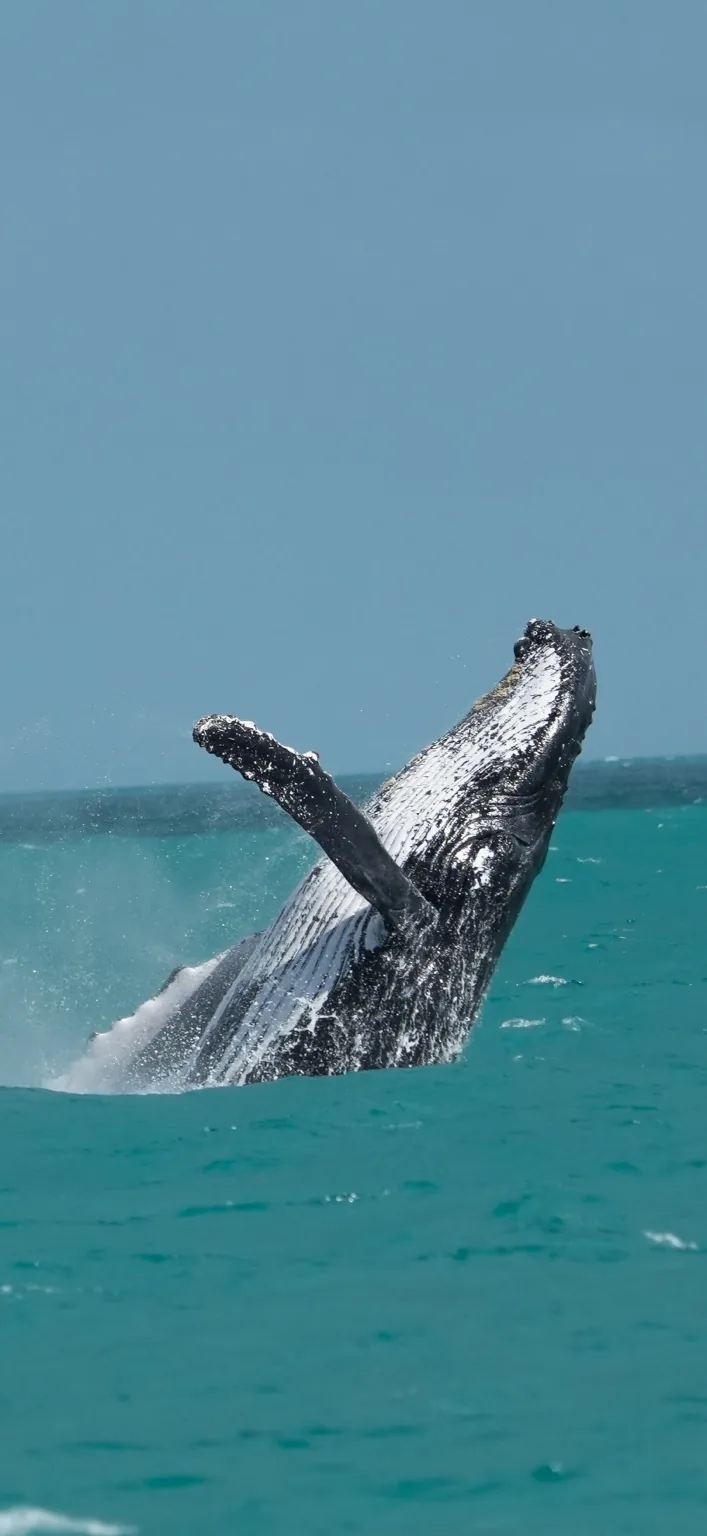
Why Abrolhos matters to humpbacks
During the breeding season, Brazil’s humpback whale population concentrates mainly on the Abrolhos Bank. The region functions as a major breeding and nursery area, where whales mate, give birth and care for calves before returning to high-latitude feeding grounds.
Whale season in Abrolhos
ICMBio indicates June through November as the whale-watching season in Abrolhos, with a peak from July to October. The Projeto Baleia Jubarte also highlights especially high concentrations around August and September. Even in peak season, numbers and behavior vary daily because the whales are free-ranging animals.
What you may observe
Possible behaviors include blows, fluke displays, pectoral slaps, breaches, traveling and interactions between individuals. Mothers with calves are an important part of the breeding season. Temporary competitive groups of males may also occur.
Whale songs and the hydrophone
Humpbacks are famous for complex vocalizations during reproduction. Bioacoustic research uses recordings to study behavior and the acoustic environment. A hydrophone can let passengers hear part of this underwater soundscape while remaining aboard the vessel.
This guide combines Scalea’s own photographs and field records with public information from institutions directly involved in Abrolhos. Rules, fees, schedules and visitor conditions may change; confirm operational information before traveling.
Want to experience Abrolhos during humpback whale season?
Discover Scalea’s 2027 Abrolhos Whale Expedition, with a small group, three days at sea and a comfortable base in Caravelas.
Explore the expedition