
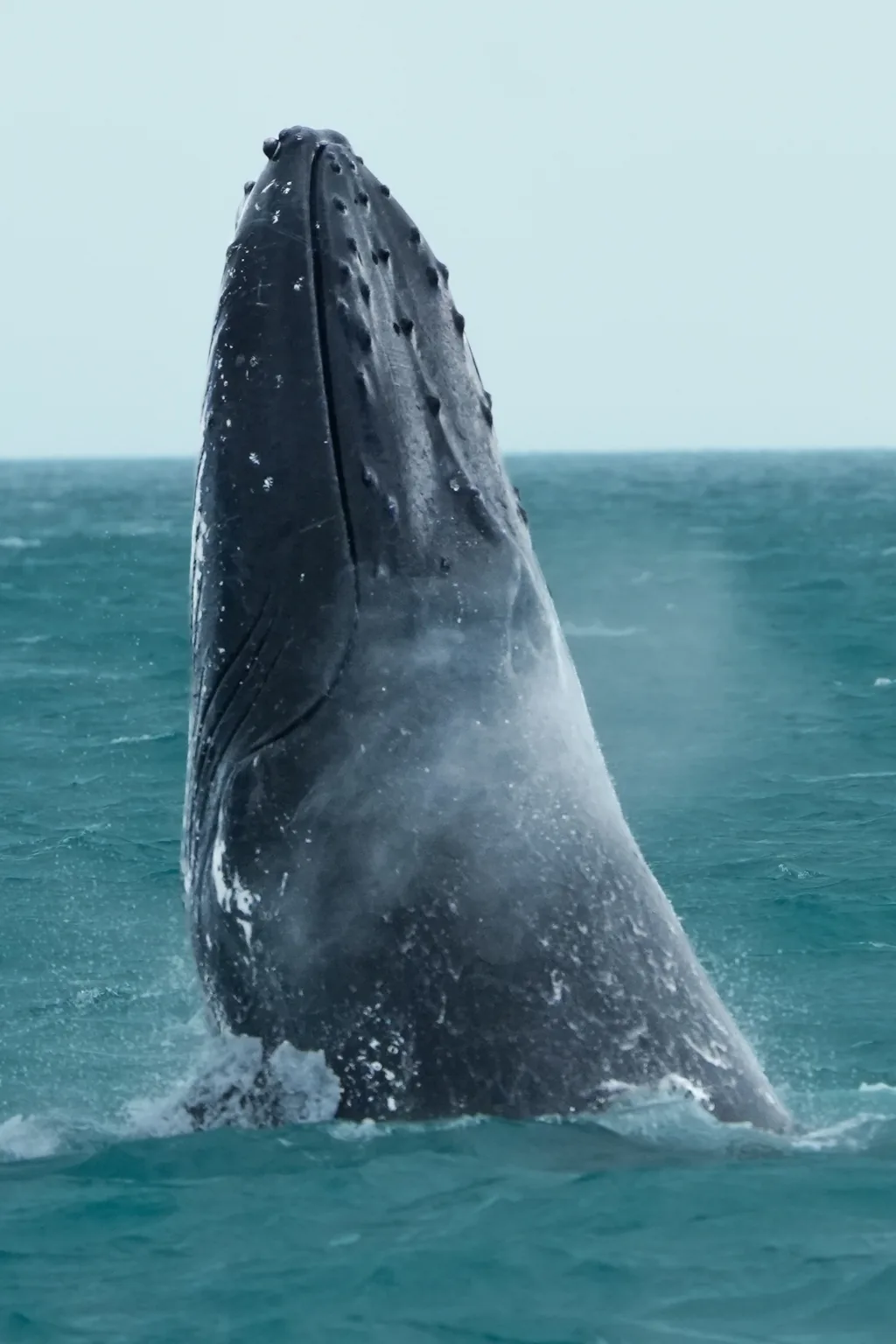
Meet the humpback whale
The humpback whale is a large migratory cetacean known for its long pectoral fins, individually patterned flukes and spectacular surface behaviors. The Brazilian population uses the coast primarily for breeding.
Migration between feeding and breeding grounds
Projeto Baleia Jubarte reports that the main feeding area for Brazil’s humpbacks is around South Georgia in the Antarctic region. The whales then migrate thousands of kilometers to Brazilian waters for the breeding season.
Why humpbacks sing
Complex songs are a defining feature of males during the breeding season. Researchers use acoustic recordings to study song structure, behavior and human-generated underwater noise.
Photo-identification and research
The underside of a humpback’s fluke works like an individual fingerprint. Photo-identification allows researchers to compare whales through time and investigate distribution, migration, site fidelity and population size.
Responsible whale watching
Responsible encounters respect distance, speed and whale behavior. The best experience is one in which the animal remains free to choose its direction, dive pattern and interactions.
This guide combines Scalea’s own photographs and field records with public information from institutions directly involved in Abrolhos. Rules, fees, schedules and visitor conditions may change; confirm operational information before traveling.
Want to experience Abrolhos during humpback whale season?
Discover Scalea’s 2027 Abrolhos Whale Expedition, with a small group, three days at sea and a comfortable base in Caravelas.
Explore the expedition